
Legal Pension provision: The blind spot in the pension system
Flash #62, May 7, 2026
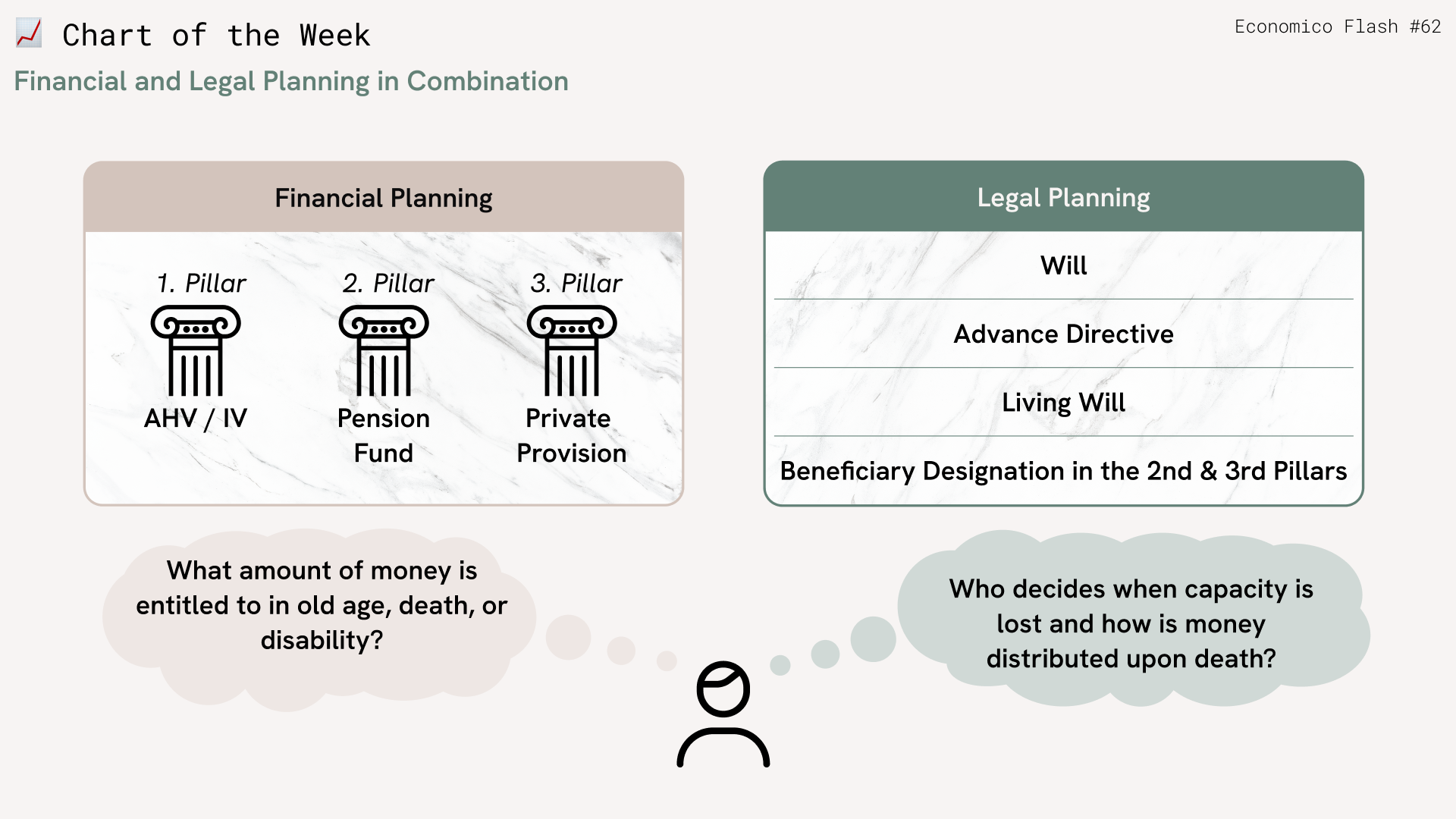
Most people in Switzerland rightly rely on the three-pillar system. AHV, occupational pension plans, and private retirement savings in the third pillar ensure that financial resources are available in old age, in the event of disability, or in the event of death. The system is robust, broadly based, and serves its purpose: it ensures that funds are paid out when a defined event occurs.
What is often overlooked, however, is this: While the three-pillar system ensures that funds are available, it does not regulate decision-making authority or the use of these funds in the event of death or loss of legal capacity. Without written provisions, the funds will be distributed in the event of death in accordance with the law or the wording of the pension fund’s regulations. In the event of loss of legal capacity, the statutory rules of representation apply in the absence of specific provisions. If these are insufficient, the cantonal Child and Adult Protection Authority (KESB) determines who will act on your behalf.
This is precisely where legal planning comes into play. It safeguards your ability to act and make decisions—even if these contingency situations arise. At the core are three instruments that address different but closely related issues.
- The advance care directive specifies who will take over your personal, financial, and legal affairs in the event of incapacity.
- The living will sets forth which medical treatments you consent to or refuse and the values that should guide your care.
- Finally, the will or inheritance contract governs how assets (after taking marital property law into account) are distributed after death and who is to be included and in what form.
Only the interaction of these instruments with the three-pillar system results in a comprehensive estate planning concept. We will examine these instruments in detail in the upcoming Flashes 63 through 65.
In cooperation with LegacyNotes, we are now offering digital assistants on Economico to help you create a power of attorney for healthcare, a living will, and a will. These easy-to-use assistants, which require little time, ensure that nothing is overlooked and that the documents are formulated in a legally sound and enforceable manner.
Only when these tools are combined with the three-pillar system does a comprehensive estate planning strategy emerge. We will examine these tools in detail in the upcoming Flashes 63 through 65.
In cooperation with LegacyNotes, we are now offering digital assistants on Economico to help you create an advance care directive, a living will, and a will. These easy-to-use assistants, which require little time, ensure that nothing is overlooked and that the documents are formulated in a legally sound and enforceable manner.
Finally, the use of funds saved in the 2nd and 3rd pillars in the event of death represents a special case. This use is determined by the so-called beneficiary provisions. Each 2nd and 3rd pillar foundation may include provisions in its regulations that deviate from the law. In particular, it may offer policyholders options so that they can determine the use of funds according to their individual needs. In Flash 66, we will discuss beneficiary provisions in the 2nd and 3rd pillars.
Takeaways
- Legal pension provision in the Event of Death: Wills & Beneficiary Designations in the 2nd and 3rd Pillars
- Legal pension provision in the Event of Loss of Mental Capacity: Advance care directive & living will
Takeaways
- Legal pension provision in the Event of Death: Wills & Beneficiary Designations in the 2nd and 3rd Pillars
- Legal pension provision in the Event of Loss of Mental Capacity: Advance care directive & living will